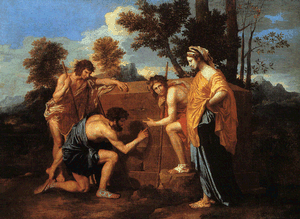
Poussin's Et in Arcadia Ego, 1638-40
Musee du Louvre, Paris
(click here for a larger version)
Announcements:
None at this time.
|Course Outline|Office Hours|Grading|
|Schedule and Reading Assignments|Final Exam|

click here for a .pdf version of the Course Outline
(To read the .pdf versions of the on-line documents,
you will need a free plug-in of Adobe Acrobat Reader)
INSTRUCTOR: |
|
OFFICE: |
SL 211 |
TELEPHONE: |
626-7921 |
E-MAIL: |
bcarroll@weber.edu |
COURSE HOME PAGE: |
http://physics.weber.edu/carroll/honors/ |
TEXTS: |
Hamlet, William Shakespeare; |
Rosencrantz & Guildenstern are Dead, Tom Stoppard; |
|
Tom Stoppard: Plays Five, Tom Stoppard; |
|
Seven Ideas that Shook the Universe, Nathan Spielberg and Bryon
D. Anderson |
In several of his plays, Tom Stoppard examines the paradox of free will in a deterministic Newtonian world. To what extent can individuals control their lives in a clockwork universe? We will examine the rise and fall of the Newtonian worldview in this course, and see how this provides the philosophical themes of three of Tom Stoppard's plays, Rosencrantz & Guildenstern are Dead, Arcadia, and Hapgood. Classroom activities will include
 | discussing the ideas of the plays |
| performing selected readings from the plays |
| exploring the physics content of the plays |
There will be a two-part midterm for each of Stoppard's plays (covering the storyline of each play and the physics in it), and an optional course project of your choice (with the instructor's approval).
The topics for the small-group discussions will be distributed during the previous class. Come prepared to discuss any of the topics. A Quick Quiz will be given each day the plays are discussed. Each Quick Quiz can add 1 point to your physics exam scores. The midterms on the physics content of the plays will consist of multiple-choice and short answer questions, and will be given in the Student Service Testing Center (SC 269) over a two-day period; remember to bring a picture ID and a #2 pencil for the multiple-choice. The other will be a short essay paper (3 - 5 pages) on an assigned topic from the plays. Each person is responsible for his or her own work. Academic dishonesty on any exam will result in a grade of zero being given for that examination. A second violation will constitute failure of the course.
Physics provides the fundamental description of physical reality, an exciting and sometimes startling view of the world that most people never get to see. Above all,
If you have questions that can't be cleared up in class, drop by my office to discuss the meaning and implications of the material. Relax and enjoy this exploration of how nature really works, and remember the words of British scientist J. B. S. Haldane:
1:30 - 2:30 MTTh
4:00 - 5:00 WF
and
any other time I am in my office
A |
An overall midterm average of at least 80% and an acceptable approved project for a total of at least 90% (midterms + project) and a satisfactory effort in group discussion |
B |
An overall midterm average of at least 80% and a satisfactory effort in group discussion |
C |
An overall midterm average of at least 70% and a satisfactory effort in group discussion |
D |
An overall midterm average below 70% or an unsatisfactory effort in group discussion |
E |
An overall midterm average below 70% and an unsatisfactory effort in group discussion |
The course project is worth up to 10%. It should be something original and creative, and must be at least peripherally related to the subject matter of the course. With your project you must hand in a short written paper (1 page maximum) that describes what you did and how it is connected to the course. No last-minute projects will be approved. Your project should be something we can both be proud to share with the rest of the class!
Click on a hyperlink for that day's handouts
|
|
|
Jan |
07 |
Introduction |
|
09 |
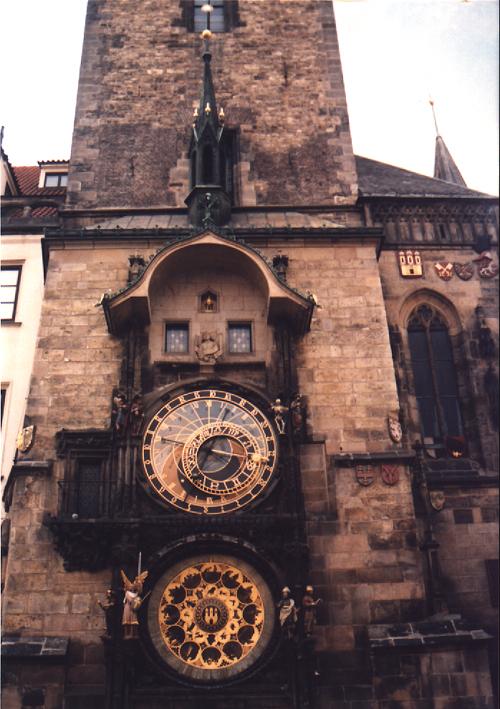
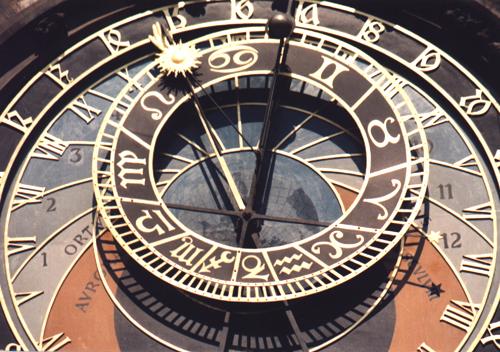
Seven Ideas, p. 14 - 35 Links: Retrograde Motion of Planets - animation, Retrograde Motion explanation.html, Prague clock, Prague clock dial |
|
|
|
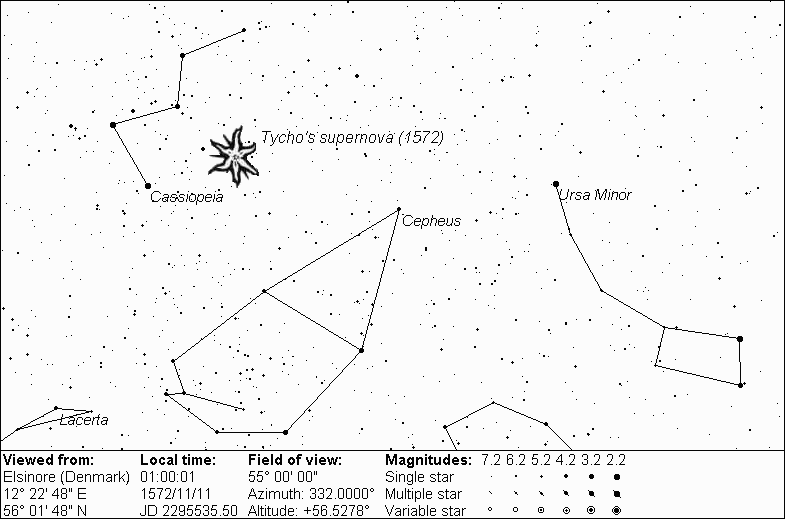
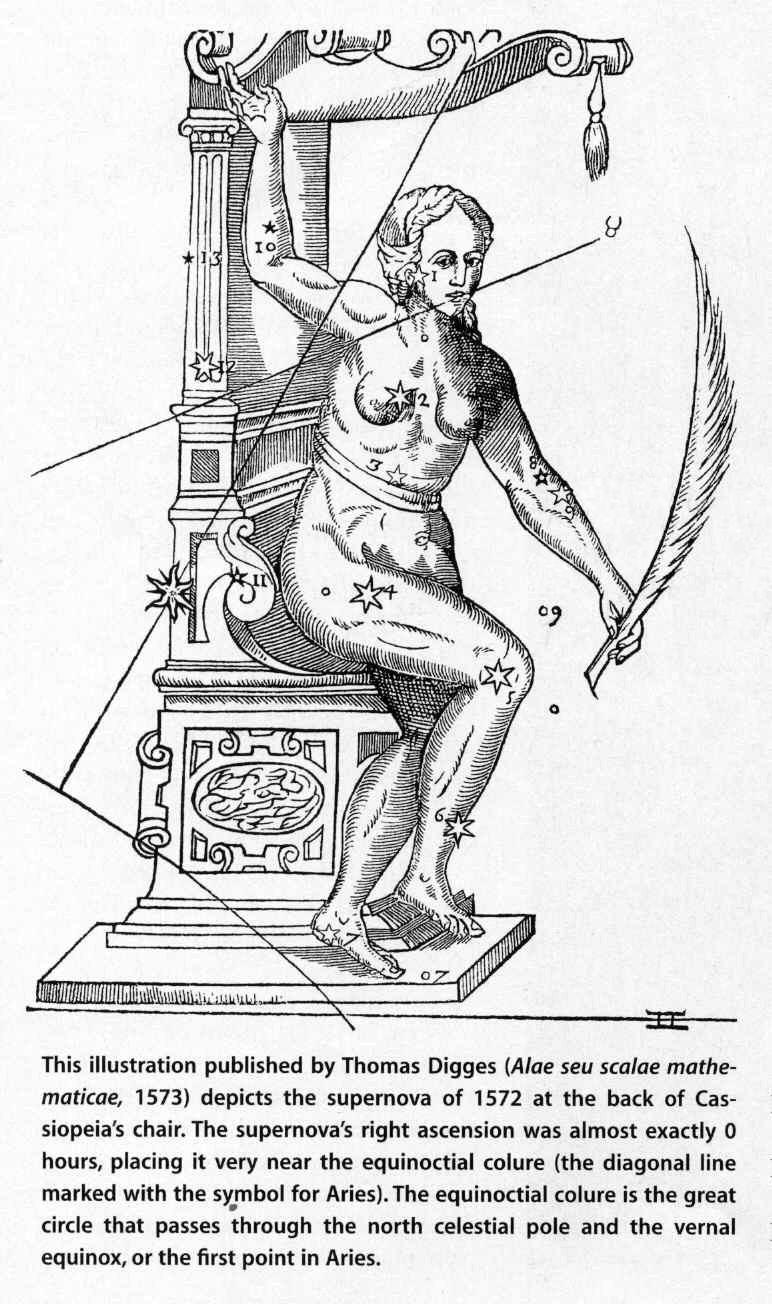
| Jan | 14 | Seven Ideas, p. 35 - 49 Handouts: The Astronomically Correct Signs of the Zodiac, Prague clock dial, Prague clock, Tycho's Supernova, Westward from the Pole, Digges, Ghosts in the Renaissance, Hamlet Discussion: Act 1 and Act 2, Scene 1 |
|
16 |
Hamlet, p. xsxv - xxxiv (Shakespeare's Life) & Act 1, Scene 1
through Act 2, Scene 1 |
|
|
|
Jan |
21 |
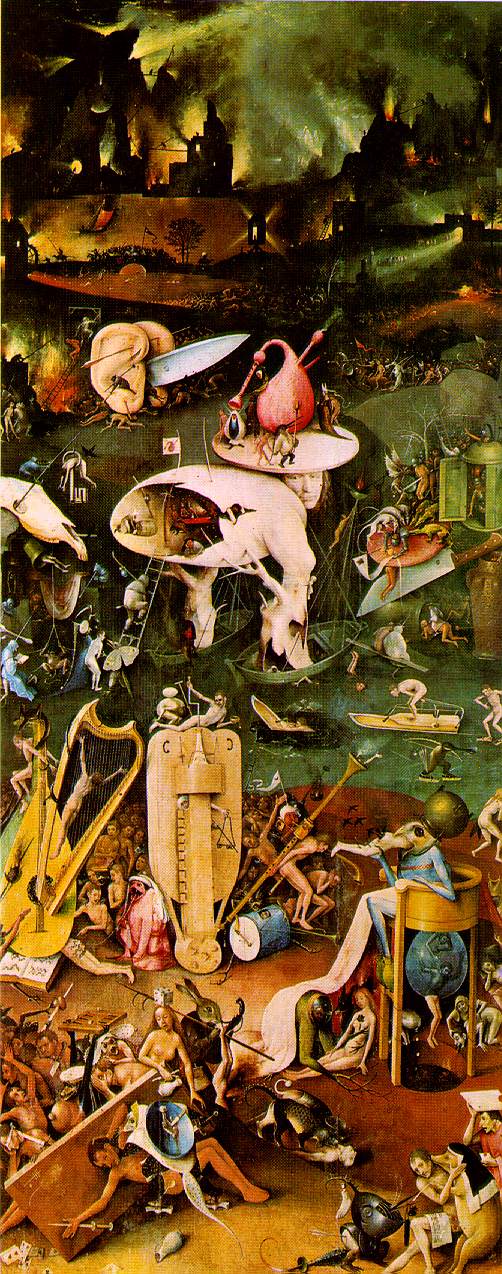
Hamlet Act 2, Scene 2 through Act 3, Scene 4 Handouts: The Garden of Earthly Delights (Hell), Green Eggs and Hamlet, Green Eggs and Hamlet, the Movie, 5 Hamlet "To be or not to be" Soliloquies, Hamlet Discussion: Acts 4 and 5 |
|
23 |
Hamlet, Acts 4 and 5 |
|
|
|
Jan |
28 |
Seven Ideas, p. 50 - 65 Handouts: Galileo's Moon, Rene Descartes |
| 30 | Seven Ideas, p. 65 - 73 Handouts: Deductive and Inductive Logic, Tao Te Ching, Review for Exam #1 (Physics) | |
|
|
|
| Feb | 4 |
Seven Ideas, p. 73 - 83 Handouts: Experience, color phi, Malquist, R & G Discussion: Act 1 |
|
6 |
Rosencrantz & Guildenstern, Act 1
Handout: R & G
Discussion: Act 2 |
| 7 & 8 | Exam #1 (Physics) - ChiTester | |
|
|
|
Feb |
11 |
Rosencrantz & Guildenstern, Act 2 Handout: R & G Discussion: Act 3 |
| 13 | Rosencrantz & Guildenstern, Act 3 Handout: R & G: The Main Themes | |
|
14 |
Movie: Rosencrantz & Guildenstern are Dead |
|
|
|
Feb |
18 |
Seven Ideas, p. 84 - 105
Handouts: Newcomen
Engine, Newcomen Engine (Quicktime
movie),
Marquis Pierre-Simon de Laplace |
| 20 | Seven Ideas, p. 106 - 124 Handout: Darkness, by Lord Byron | |
|
|
|
Feb |
25 |
Seven Ideas, p. 125 - 138
Handout:
Review for Exam #3 (Physics) |
|
27 |
Exploring Chaos: Ch. 1, p. 11 - 21 |
|
|
|
| March | 4 | Arcadia, Act 1, Scenes 1 and 2, p. 7 - 52
Handout:
Arcadia
Discussion: Act 1, Scenes 3 and 4
|
| 6 | Arcadia, Act 1, Scenes 3 and 4, p. 52 - 75 Handout: Arcadia Discussion:
Act 2, Scenes 5 and 6 Exam #3 (Physics) - ChiTester |
|
| 7 & 8 | Exam #3 (Physics) - ChiTester | |
|
|
|
| March | 11 | SPRING |
| 13 | BREAK | |
|
|
|
March |
18 |
Arcadia, Act 2, Scenes 5 and 6, p. 76 - 102 Handout: Arcadia Discussion: Act 2, Scene 7 |
| 20 | Arcadia, Act 2, Scene 7, p. 102 - 137 Handout: Arcadia: The Main Themes | |
|
|
|
March |
25 |
Seven Ideas, p. 139 - 183 |
| 27 | Seven Ideas, p. 184 - 198 | |
|
|
|
April |
1 |
Seven Ideas, p. 199 - 220
Handout: Three Failures of
Classical Physics |
| 3 | Seven Ideas, p. 220 - 224 Handout: The Meaning of Electron Waves, Review for Exam #5, Hapgood Discussion: Act 1, Scenes 1 - 3, The Character of Physical Law | |
|
|
|
April |
8 |
Hapgood, Act 1, Scenes 1 - 3, p. 489 - 516 Handout: Hapgood Discussion: Act 1, Scenes 4 and 5, Konigsberg Bridges Problem |
|
10 |
Hapgood, Act 1, Scenes 4 and 5, p. 516 - 547 |
| 11 & 12 | Exam #5 (Physics) - ChiTester | |
|
|
|
April |
15 |
Hapgood, Act 2, Scenes 1 - 3, p. 548 - 575 |
|
17 |
Hapgood, Act 2, Scenes 4 - 7, p. 575 - 593 |
|
|
|
Thursday, April 22, 9:00 - 10:50 p.m.
Presentation of course projects
RETURN TO THE TOP OF THIS PAGE
Last modified: Tuesday, April 08, 2014 06:14 PM
 Go to the Physics Department Home page
 Go to the WSU Home page
e-mail comments to: bcarroll@weber.edu